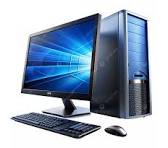
• A computer is an electronic device, operating under the control of instructions stored
    in its own memory that can accept data (input), process the data according to specified
    rules, produce information (output), and store the information for future use
     
    Computer components consist of hardware and software, with essential internal parts including the motherboard, CPU (processor), RAM (memory), storage (SSD/HDD), and GPU. These components work together to process data, with the system powered by a PSU and housed in a case. External peripherals like monitors, keyboards, and mice allow user interaction.
    1
    .
     
    (You can edit or remove this text)

Available courses

Computer network is a collection of interconnected devices that communicate with each other to exchange data and resources. It enables efficient communication and supports services like email, file sharing, and internet access.

Introduction to Computer
1 Laboratory safety rules
2 Word processing and spreadsheet
3 EndNote | Thomson Reuters
4 Statistical analysis software: SPSS Inc.
5 Basic computer programming: Qbasic

C PROGRAMMING IS A  procedural-based programming language developed in 1972
by Dennis Ritchie within the halls of Bell Telephone Laboratories. The C
programming language was originally developed for use with the UNIX
platform and has since spread to many other systems and applications. C has influenced a number of other programming languages, including C++ and Java.
Beginning programmers, especially those enrolled in computer science and engineering majors, need to build a solid foundation of operating systems, hardware,
and application development concepts. Numerous learning institutions accomplish this by teaching their students how to program in C so that they may progress
to advanced concepts and other languages built upon C.
Many students of C will rightly admit that it’s not an easy language to learn, but
fortunately Thomson Course Technology PTR’s Absolute Beginner series’ professional insight, clear explanations, examples, and pictures, make learning C easy
and fun. Each chapter contains programming challenges, a chapter review, and a
complete program that uses chapter-based concepts to construct an easily built
application.
To work through this book in its entirety, you should have access to a computer
with a C compiler such as gcc and at least one text editor like the ones found on
UNIX (e.g., vi, vim, Pico, nano, or Emacs) or Microsoft Windows (e.g., Notepad).
WHAT YOU’LL FIND IN THIS BOOK
To learn how to program a computer, you must acquire a progression of skills. If
you have never programmed at all, you will probably find it easiest to go through
the chapters in order. Programming is not a skill you can learn by reading. You
have to write programs to learn. This book has been designed to make the process
reasonably painless and hopefully fun.
Each chapter begins with a brief introduction to chapter-based concepts. Once
inside the chapter, you’ll look at a series of programming concepts and small programs that illustrate each of the major points of the chapter. Finally, you’ll put
these concepts together to build a complete program at the end of the chapter. All
of the programs are short enough that you can type them in yourself (which is a